Founder’s Story
Founder’s Story
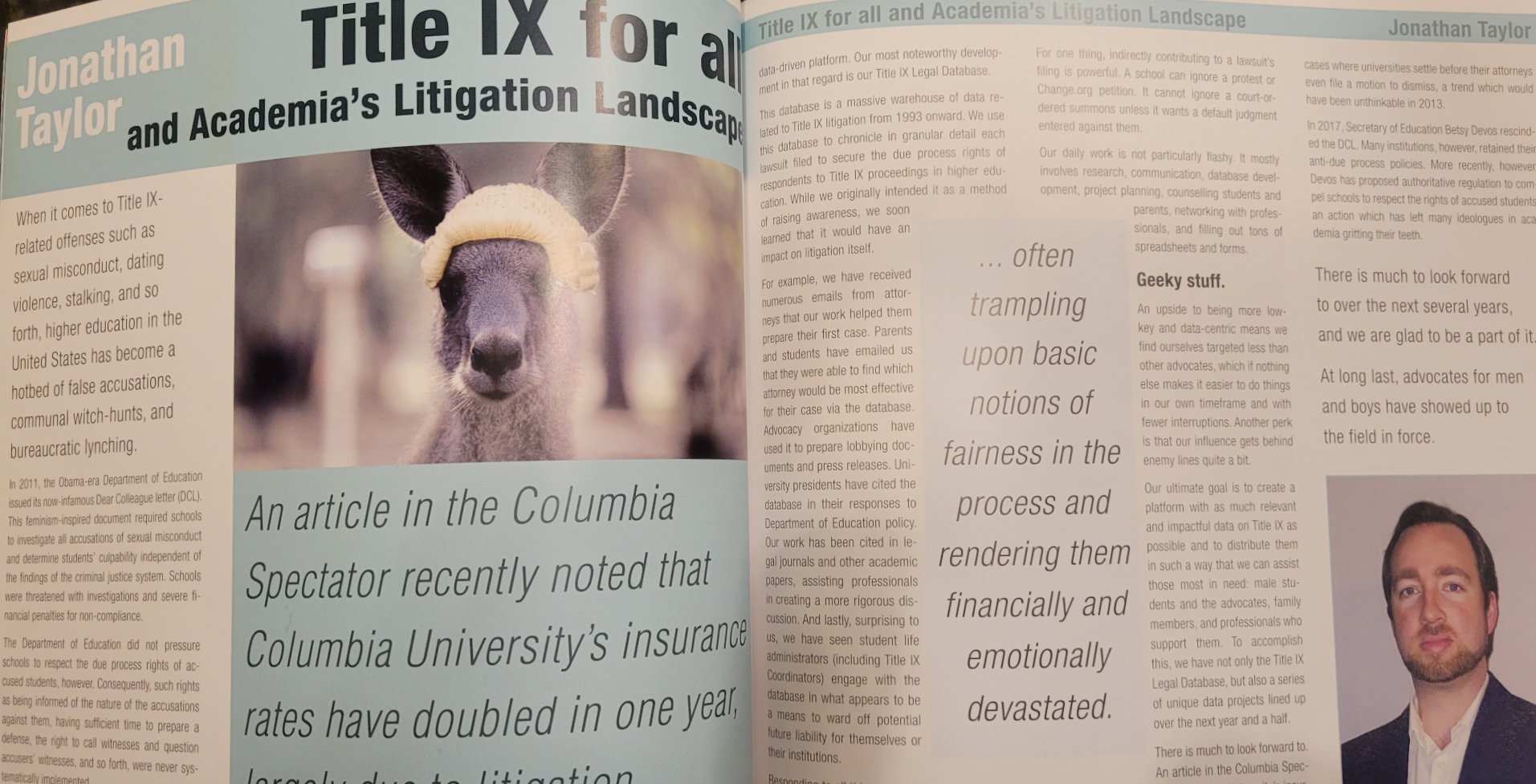
Hi, I’m Jonathan. People sometimes ask me how I got into this and what motivates me. In another life, I was a higher ed instructor. I saw some things happening in academia that I disagreed with, and worse things on the horizon. One of them was how teachers and students accused of misconduct were too often presumed guilty and treated unfairly, largely due to the one-sided and biased politics that dominate discussions about gender equality in higher education.
I was never accused of anything, but like many male teachers I was concerned about what would happen if I was wrongly accused. And I was concerned about university policies that could compel me, if I might one day be told about or overhear some allegation by a wrongly accused student, to relay that report to the school’s Title IX office and potentially put an innocent student through the meat grinder. So, in 2010, I founded A Voice for Male Students (later renamed Title IX for All to show that we serve both male and female accused students and students who could not afford attorneys) and joined a few fellow advocates to speak out about due process and gender bias in academia. We were like voices in the wilderness back then; few dared to speak, and we did so at great professional risk.
Sadly, our voices were not enough. The events that followed from 2011 to 2020 – and which are chronicled in the posts and pages of this website – confirmed everything we feared would happen. Countless accused students were systematically hustled through a vague grievance process and found guilty in Kafkaesque “kangaroo courts” where guilt was predetermined. Many of them were not able to call witnesses in their defense, pose questions to be asked of their accusers or their witnesses, present evidence, see the evidence against them and respond to it, or sometimes even know what the allegations were or the names of their accusers. Many investigators and decision-makers (who were often the same person) were poorly trained, had conflicts of interest, or were biased against accused students in general and male students in particular. It was a sham.
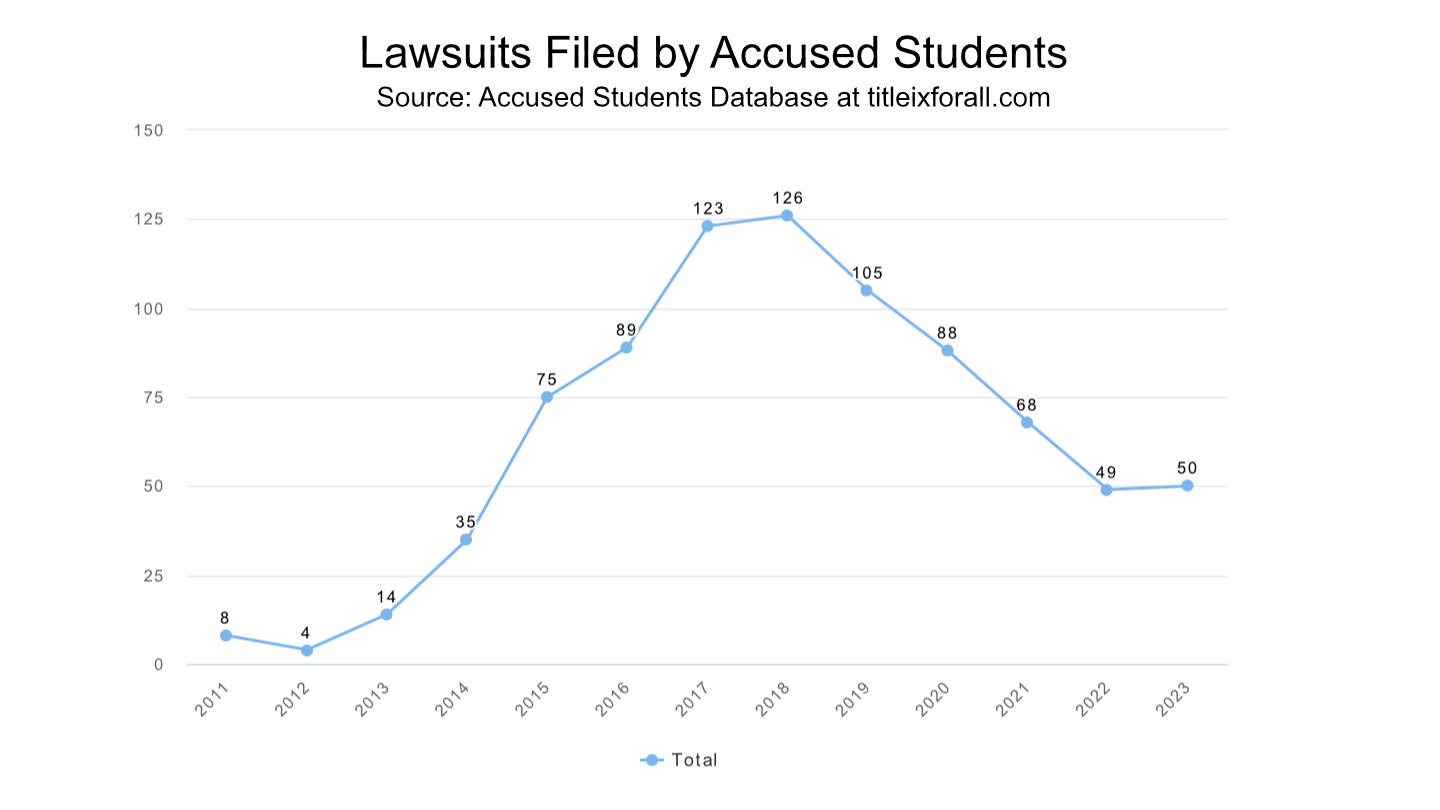
Students and their families were devastated. Untold numbers of lives were altered or destroyed. Parents reported that their children who were formerly cheerful and full of life were now so shell-shocked and depressed that they barely recognized them. Many parents grieved that the process was over so fast and was so secretive that there was no chance for them to help. Hundreds of accused students sued, except in cases where their parents sued on their behalf because their children committed suicide. Accused teachers fared little better.
See related: “Timeline: The Movement for Fairness for Accused Students”
I had no special connections, and I wasn’t an attorney (I was just a former English teacher!), so I wondered what I could do. At that time, every advocate, accused student, Title IX attorney, and parent was learning how to manage being overwhelmed, and my hobbies included web design and database development, so I created a database to help people keep track of all the lawsuits accused students were filing against their universities. I called it the Title IX Lawsuits Database, though I later renamed it to the Accused Students Database. Since 2013, I have spent thousands of hours updating it whenever a new lawsuit was filed or a new decision came in, or building new features to make it more accessible and useful. I added tons of data on lawsuits, judges, courts, attorneys, and schools. The 13,000+ legal files alone cost well over $10,000 to obtain.
For years, I mostly paid for it out of my own pocket and supplemented it with donations for which I was grateful but which, unfortunately, never fully covered the cost. It was hard to justify at the time while living in a 900 square foot apartment with no health insurance. I am quite certain some of my friends and family members thought my fixation (or obsession) was weird. Eventually, I had to shut everything down because I couldn’t keep up with the costs. But I received so many emails asking me to bring the database and website (which had many resources for accused students, parents, and attorneys) back that I had to. The only way I could make it work financially, though, was a compromise: converting the database to require a subscription. It was all free to access before then.
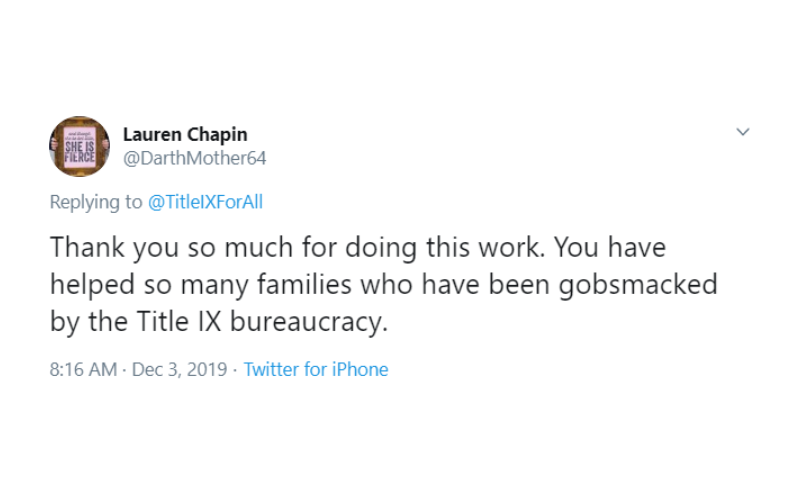
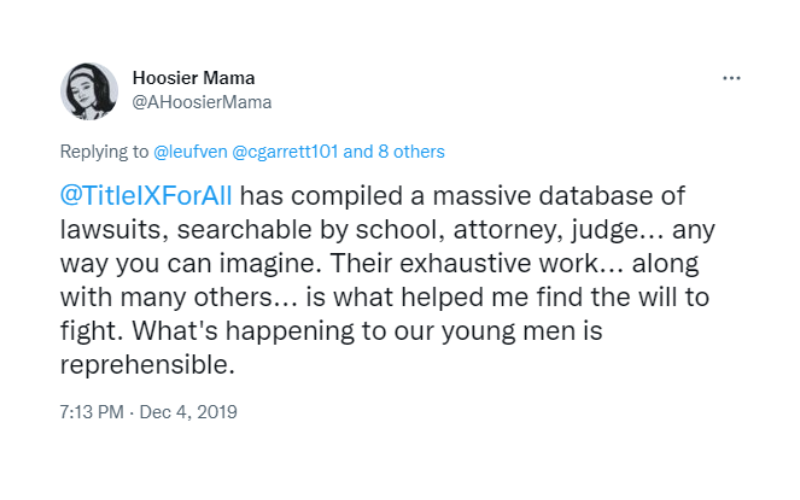
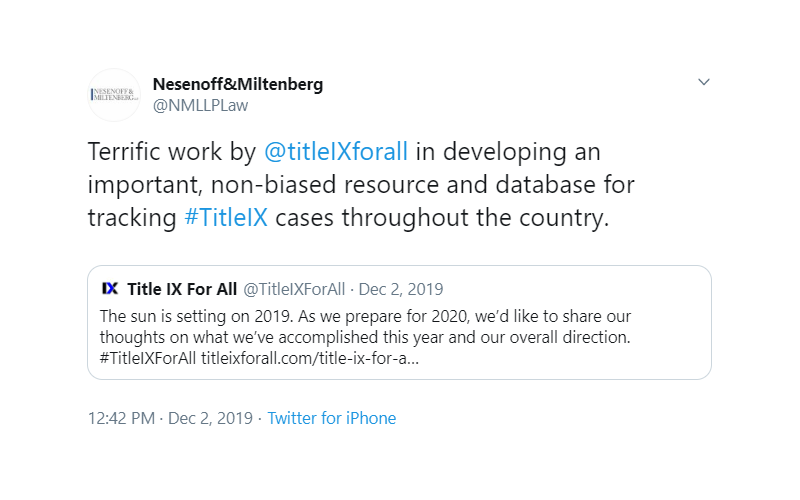
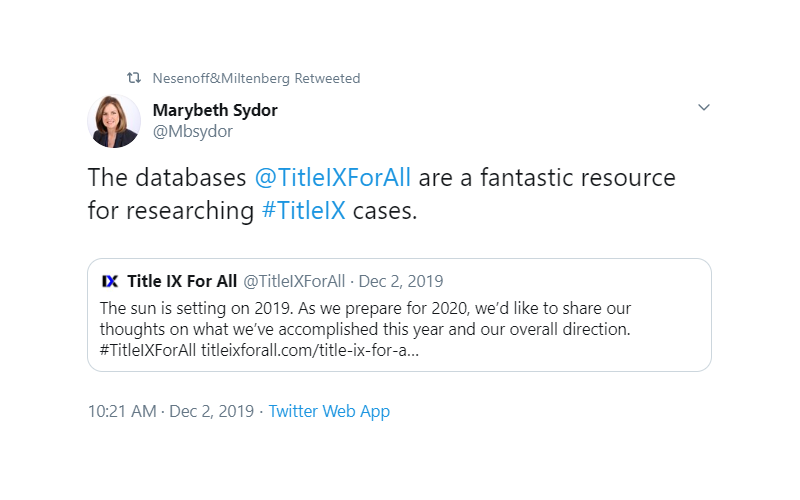
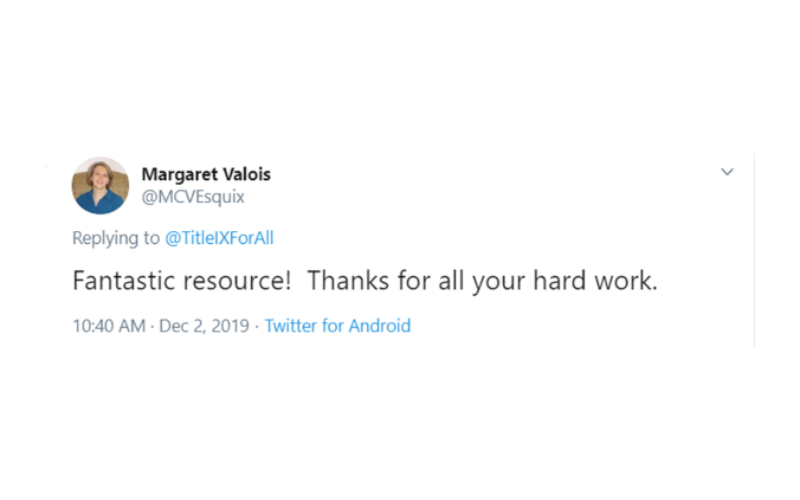
Looking back, the database was what what started transforming Title IX for All from an amateur advocacy effort into a professional organization. We were now able to systematically track and analyze what was going on in the litigation movement – and we were able to make that data accessible to the general population. The database started being cited everywhere. Reporters and radio networks started reaching out to me to get my take on what was going on on campus. People started asking me to speak at conferences. Attorneys asked me to include them in the database because their families were using it to find and compare attorneys. Students and professional researchers would write to me about how the database helped them with a paper, their dissertation, or a broader study. Many families told me that the database helped them plan next steps, navigate a Title IX proceeding, or help them feel like they were not alone.
I used the database to study every judicial decision on the matter that I could get my hands on. I used what I learned any and every way that I could. I spoke before and submitted countless documents to federal agencies like the Department of Education (ED) and the Office of Information and Regulatory Affairs (OIRA). I interviewed with reporters at NPR, Newsweek, Associated Press, New York Times, and others. I called congressional staffers and assisted other advocates who were flying out to meet them by helping them prepare written materials. I spoke at regional and national conferences and networked with advocates. Every month for years, I either had an interview with a reporter, spoke at a conference, was on a conference call speaking before a coalition of non-profits or lawmakers about Title IX matters, or was releasing a new feature for our databases. All the while, I spoke to students and families, listening to what they were going through and trying to help them as best I could.
Over time, laws, judicial precedents, and regulations changed. I am glad to say that I was a part of it. Title IX is now a complex and highly specialized area. It is only truly understood by those who eat, sleep, and breathe this kind of work – or who have been involved in a Title IX investigation. Accused students and their parents, when introduced to the system in real time, are often shocked to find out what it is like. Many of them feel like they cannot tell their friends and family members about it because you have to live through it to really understand it.
That’s why I have tried to make knowledge about the Title IX world more accessible to the general public by talking about what would otherwise only exist in obscure court records and creating databases to track court cases, regulations, and investigations by the Department of Education. That’s also why I decided to be an advisor for accused students, most of whom are unable to hire an attorney.
Over the years, various advocates have come and gone. I have decided to stay. I see this problem as an inter-generational one. It is not just a legal issue for the courts, although that is an important part. It is also a cultural and political problem. And there are huge, entrenched non-profit and business networks that make a living out of opposing due process and the humanity of the wrongly accused. This issue will not be solved by any one regulation or any series of court decisions. It will be solved by a society-wide generational shift in our understanding of how to treat the accused in general, and men and boys in particular.
I would be lying if I denied that I am also motivated by what I believe is a profound mismatch between what higher ed is and what it should be. When I was young, I looked at academia as a beacon of enlightenment and an institution dedicated above all else to the pursuit of objective truth. I thought that, by the very nature of this divine mission, corrupting influences like politics and prejudice would just fall away. How wrong I was. I was incredibly naive.
I am older now. I am still motivated by youthful passions, but I have tempered them with sobering realizations. I have learned that there never was a Golden Age of Academia; each era of academia has had its own distinct challenges and flaws. We can, however, find ways to reduce the harm and right the wrongs that exist in our own time. I have found that making a positive difference in the lives of wrongly accused students and their families is a great way to do that. So long as I can do that, I will.
– Jonathan Taylor
Founder, Title IX for All
Examples of Title IX Advocacy